El Salvador Finca Ethiopia Gesha - Filter
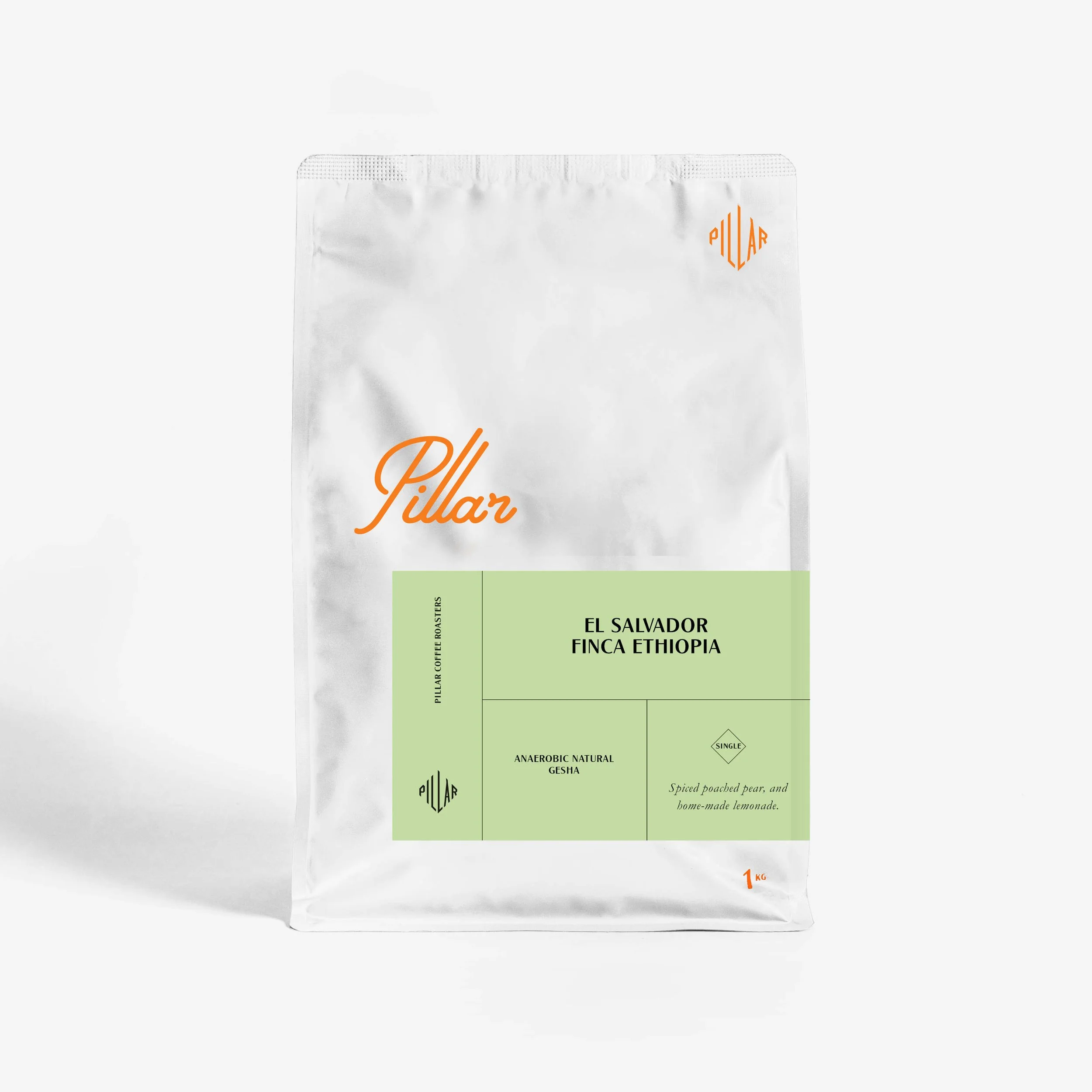

El Salvador Finca Ethiopia Gesha - Filter
El Salvador
Finca Ethiopia
Canton
Buenos Aires
Apaneca
2100masl
Gesha
Anaerobic natural
Spiced poached pear and homemade lemonade.
Finca Ethiopia is a 34.5-hectare coffee farm that came to life in 2018. It’s part of Los Naranjos Coffee, a group of high school friends who decided to turn their shared love for coffee into a thriving business. Together, they manage several farms in the beautiful Apaneca region of El Salvador.
The farm, originally called Finca La Gloria, was renamed to Finca Ethiopia as a tribute to coffee’s birthplace. With that name, the team set out to produce coffees worthy of coffee's legacy.
High school dreamers teamers: When the team took over the property, they had their work cut out for them. It had been abandoned for years, and where others saw decay, they saw potential and began a complete renovation. Despite having 34.5 hectares of potential planting, the team chose to cultivate only 13. The rest they chose to remain natural forest, intentionally preserved to protect the area’s native plants and animals, and to allow the coffee to exist in its most natural and thriving state. It’s a thoughtful balance between farming, biodiversity, and conservation--something Los Naranjos Coffee takes real pride in.
The farm and its many furry friends: Finca Ethiopia sits just behind the Ilamatepec Volcano, nourishing the surrounding soil with rich volcanic nutrients. The cherry at Finca Ethiopia is 100% shade-grown, surrounded by native trees that help regulate temperature and moisture, and encourage biodiversity. The farm, spilling into the surrounding protected mountain area, is home to wildlife like deer, armadillos, toucans, parakeets, and squirrels.
A path of least resistance: Like most farms, Finca Ethiopia deals with the usual coffee farming hurdles--namely pests and diseases like leaf rust. But instead of relying on chemicals and poisons, Los Naranjos Coffee take a smart and eco-friendly scientific approach.
The team regularly studies their soil to understand its nutrients, then adjusts fertiliser applications accordingly (usually 4–6 doses per year). All weed control is done using machetes and 'old-fashioned' elbow grease, with no herbicides in sight.
The team also works hard on soil and water conservation, investing in water collection pits and maintaining vegetation barriers to protect groundwater.
It's pickin' time: The harvest in El Sal typically runs from February through June. But before picking begins, the team trains pickers to identify the ideal ripeness by colour and sugar level. Using Brix measurements, they sample cherries to ensure each lot is harvested at the perfect time.
Controlled fermentation: Taking place in tanks with degassers and drain valves, the team constantly monitor pH and sugar levels. They typically ferment the coffee for 72 hours until reaching a pH of 4.05. This carefully controlled fermentation brings out unique, complex, and clean flavours without any unwanted, overly fermenty notes.
After wet processing, the coffee is pre-dried for three days until it reaches about 60% humidity before being transferred to raised drying beds. The altitude makes drying a little slower, but the upside is that it creates more even drying and better bean stability, resulting in a cleaner cup.
After about 30-40 days, the coffee reaches 10% humidity. The beans are then left to rest for 24 hours before the coffee is checked again to confirm consistency.
The final step: The last thing that happens is a series of cuppings to ensure quality across the entire lot and across the completed drying and storage phases.