Costa Rica Las Lajas Perla Negra - Filter
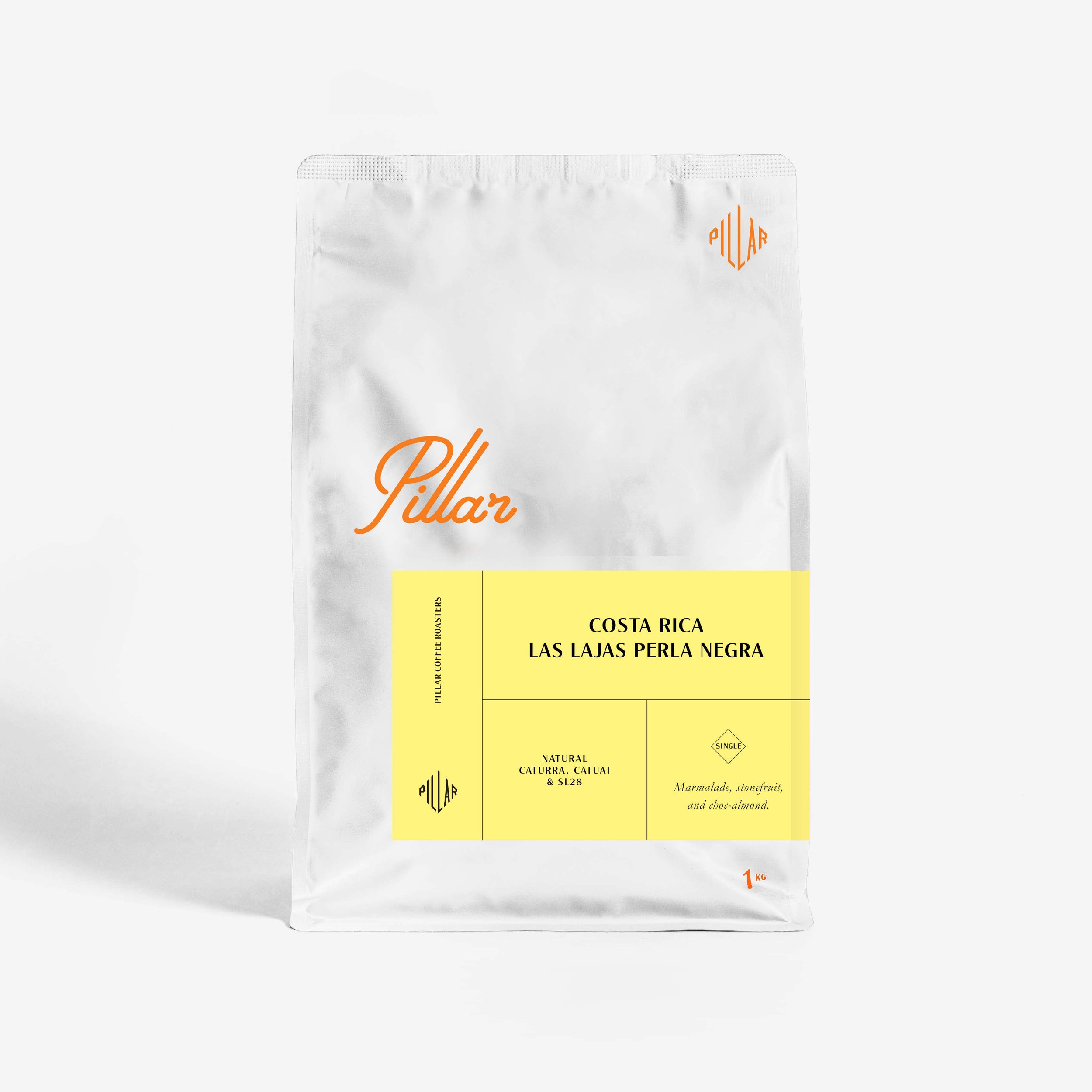

Costa Rica Las Lajas Perla Negra - Filter
Costa Rica
Oscar and Francisca Chacon
Las Lajas Perla Negra
Alajuela
Central Valley
1300-1550masl
Caturra, Catuai & SL28
Natural
Marmalade, stonefruit, and choc-almond.
Las Lajas: In the heart of Costa Rica’s Central Valley, tucked into the town of Sabana Redonda, Alajuela, sits Las Lajas--one of the country’s most influential and respected specialty coffee farms. It’s owned and run by the powerhouse husband and wife team, Oscar and Francisca Chacon.
Their operation spans eight farms, all sitting between 1,300 and 1,550 meters above sea level, a sweet spot for cultivating complex, high-elevation coffees. Together, the farms cover more than 30 hectares, nourished by the nearby Poas Volcano and benefitting from moisture-rich rains drifting in from the Atlantic.
Silver linings: Las Lajas didn’t set out to become a leader in honey and natural processing, but rather rose like some kind of delicious coffee phoenix from crisis.
After an earthquake in 2008 cut off access to water, Oscar, fearful of losing their harvest, desperately tried processing the harvest without using the traditional washed method. With the hope of salvaging the crop, Oscar experimented with natural and honey processes. What came next was history--his coffees turned out to be some of the best they had ever produced.
Word travelled quickly through Costa Rica, and in no time Las Lajas became known worldwide for their honey and natural coffees. Resiliance ended up changing Costa Rican specialty coffee forever.
Today, approximately 90% of their production consists of honey or natural coffee. A huge leap from the 0% they produced before the 2008 earthquake! Of the 1,500 bags they produce each year (69 kg bags), around 80% meet export quality, which is exceptionally high for the region.
Maintaining their edge: Las Lajas has stayed on the cutting edge ever since, consistently exploring new ways to push flavour and quality. One of their signatures is the use of temperature-controlled drying curves, where they treat drying similarly to the way we treat the drying phase during roasting. Other experimental techniques they employ are heaping coffee to slow drying after fermentation, resting the coffee mid-dry for about a week, and intermittently moving the cherry to create layers--this technique creates greater complexity and sweetness.
Invest and reinvest: The Chacon family has always kept their eyes looking forward. As Las Lajas has grown, they’ve consistently reinvested to improve quality and support sustainable progress. Some recent investments include a fully refurbished quality and cupping lab, expanded office and operational space, and new roasting equipment for profiling, training, and QC.