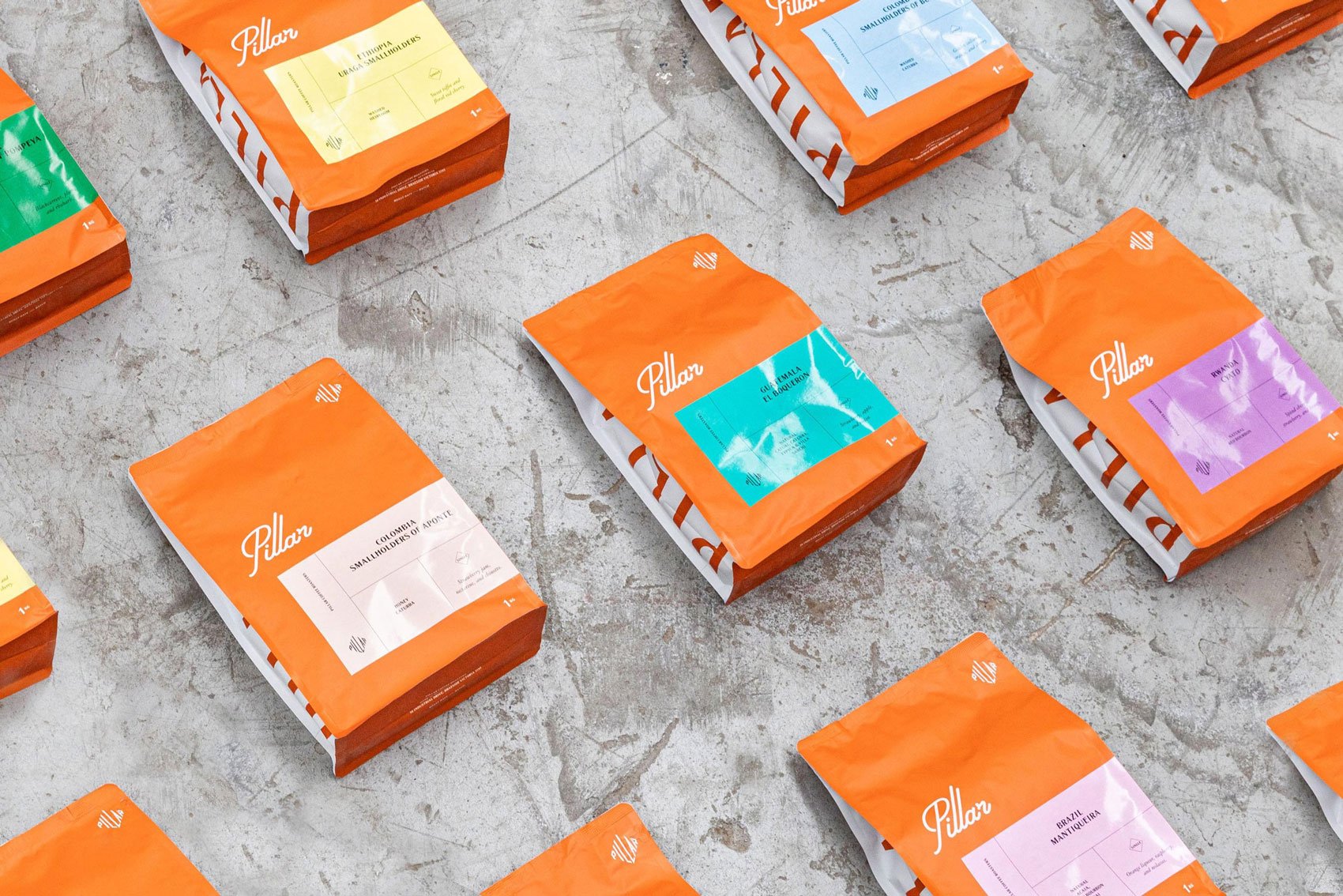


Pillar Coffee is dedicated to sourcing ethical, traceable, and environmentally responsible coffee. As a micro-roastery, we exclusively buy 85+ score specialty coffees, which come with supply chain transparency and excellence guaranteed. With a new range on offer each month, your coffee adventures will always be fresh and inspiring.
FREE SHIPPING ON ORDERS OVER $50
Origins: Central and South America
Wayward is a full-bodied blend with berry sweetness, medium acidity and a milk chocolate finish. Sweet notes of chocolate and honeycomb are a fine representation of the blended origins.
A syrupy milk chocolate body with notes of honeycomb - awesome as a flat white or a long black.
Brazil
Alta Mogiana, Minas Gerais
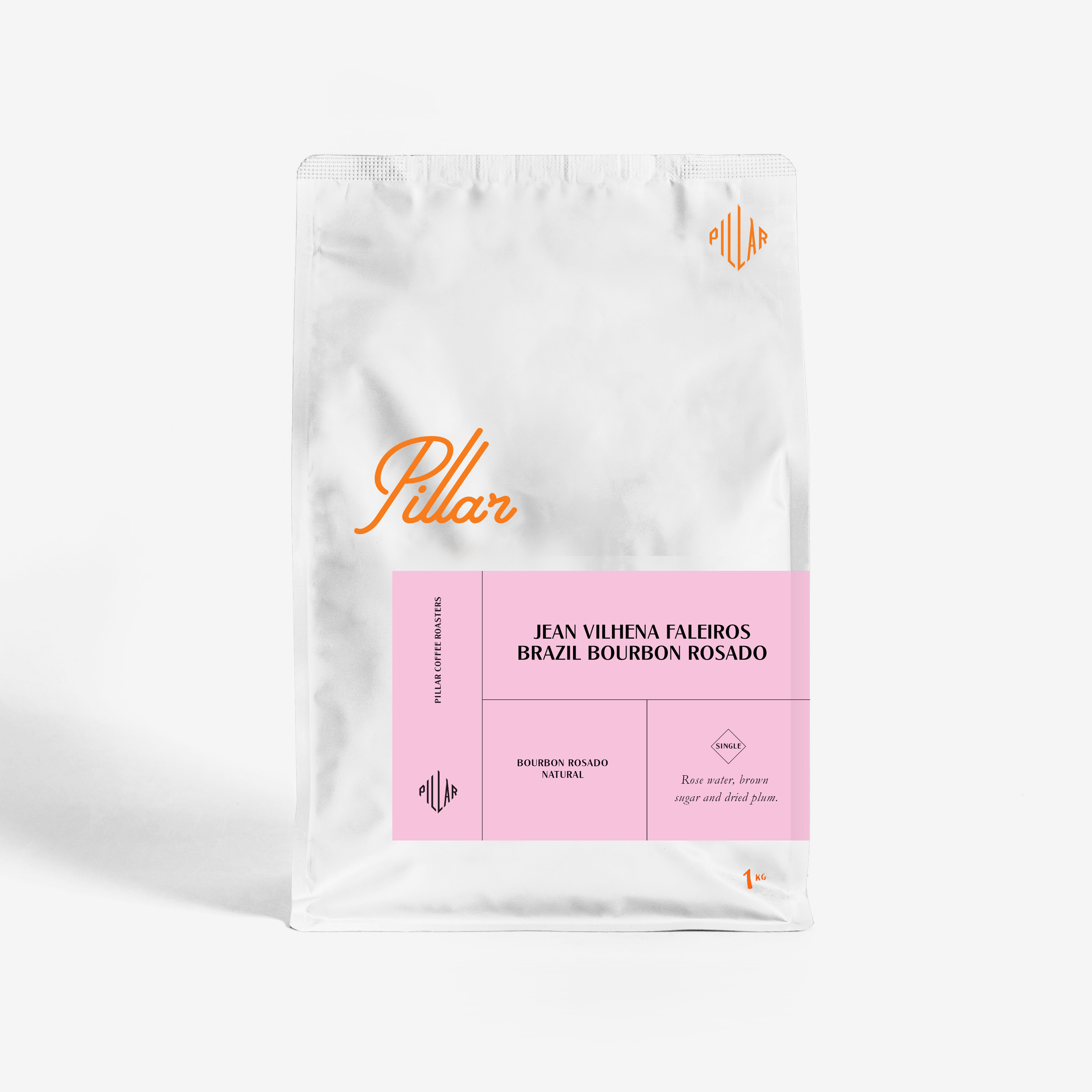
Jean Vilhena Faleiros
Santa Monica Estate
Bourbon Rosado
1200-1240 masl
Natural
Rose water, brown sugar and dried plum.
The enduring legacy of the Vilhena Faleiros family: Santa Monica stands as a beacon of excellence in the realm of specialty coffee. As a third generation coffee farmer, Jean Vilhena Faleiros has seen knowledge, dedication and time honored traditions passed down from his family who have owned and operated the Santa Monica Estate for over 100 years. Under Jean's visionary guidance, Santa Monica Farm blends time-honored traditions, a commitment to organic farming and modern techniques, ensuring that the farm grows with both heritage and innovation.
Santa Monica Farm: In the southeastern region of Brazil, you will find Santa Monica Farm nestled in the Alta Mogiana region of Minas Gerais. The farm sits at an elevation of 1200-1240 meters above sea level, and benefits from an idyllic microclimate which nurtures the finest coffee beans. The reputation of coffee from this area is so prized because of its ideal geography, slow maturation and generational expertise.
Geography is where it's at: The Global Coffee belt runs along the earth's equator, between the Tropics of Cancer, and the Tropics of Capricorn. It is defined by its latitude, sitting almost entirely between 25° North to 30° South. It is here that coffee plants thrive, receiving consistent warm temperatures, high altitudes, abundant wet seasons followed by dry periods and rich mineral dense soils.
Brazil’s latitude ranges from 15°16’ North to 33°44’ South. The country covers 4,395km from top to bottom, with landmass in both the Northern and Southern Hemispheres. Almost all of the country sits within the Global Coffee Belt, and is one of many factors making Brazil such a successful coffee producing country.
Keep an eye out for Jean Vilhena Faleiros: We are very excited to be welcoming back another stellar line up of coffees from Jean Vilhena Faleiros. This time around you will see 4 microlots from Jean Vilhena Faleiros Santa Monica Farm in Brazil on our filter menu as well as 1 on our espresso menu over the coming months. Across these lots you will see a mixture of varietals as well as processing methods. We are lucky enough to see the use of specific cultivated yeast strands during anaerobic fermentation on four out of the five of these coffees! It’s with great pleasure that we are able to share his fresh harvest with you again.
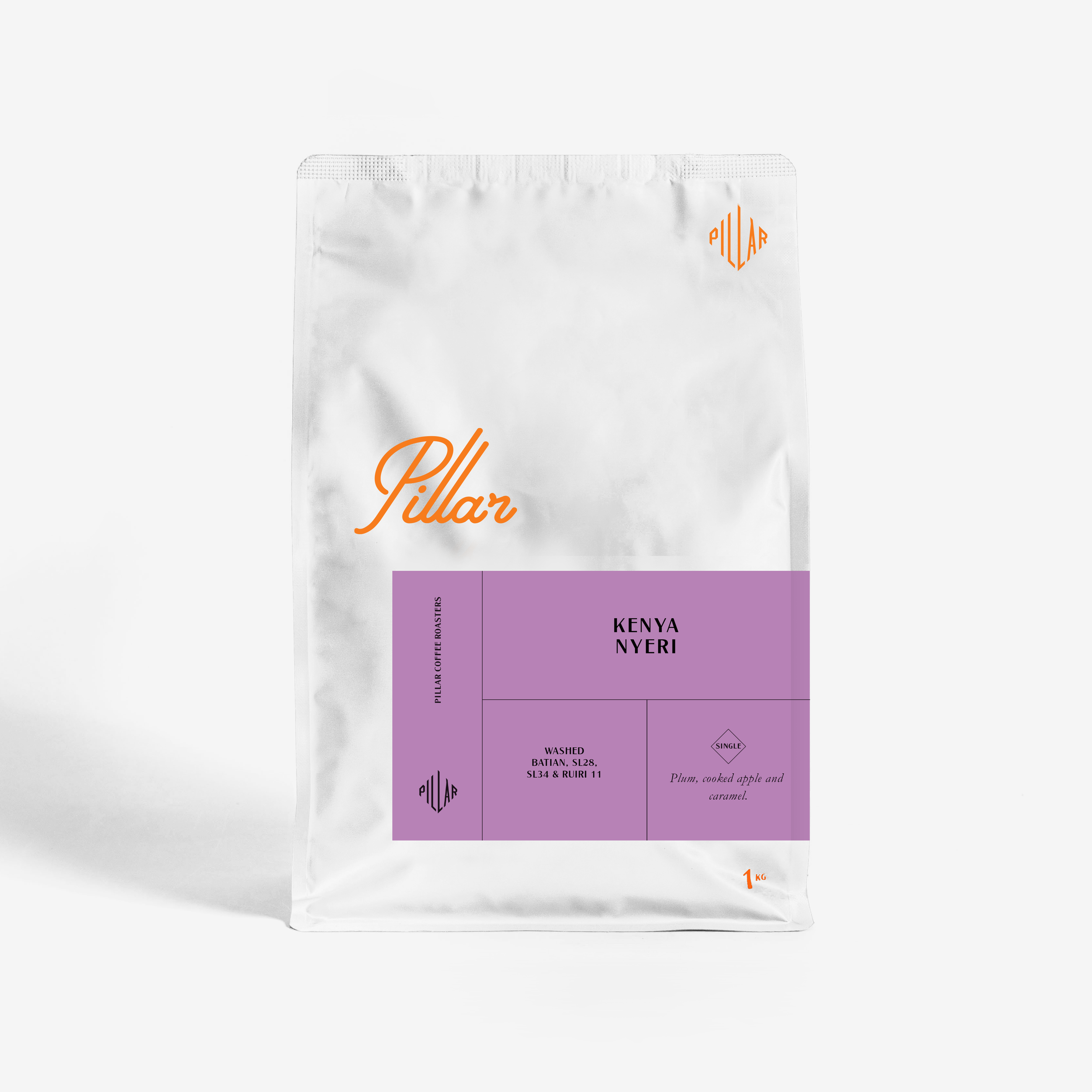
Nyeri
Gachatha
Microlot
1800 masl
Batian, SL28, SL34, Ruiru 11
Washed
Plum, cooked apple and caramel.
Nyeri Nitisols: The Aberadare Mountains combined with neighbouring Mount Kenya, creates the perfect microclimate for Nyeri. Here at high altitudes, Nyeri benefits from the region's porous, highly fertile, nutrient rich volcanic soils known as Nitisol. Nitisols are typically derived from parent materials like volcanic ash or basalt. The unique soil is highly acidic, loaded with organic matter and has excellent drainage and strong structural stability, giving coffee from this region its distinct winey or juicy acidity.
Micro Microlots: In Kenya, microlots are either traceable to a specific factory like Gachatha, or sometimes down to individual farms. Small batches known as 'day lots' are graded and separated out, based on how good they taste in the cup. Since most Kenyan farmers only have 1/8–1/4 of a hectare, this sort of blended Coop processing is the most common in Kenya, with local farmers usually bringing their cherries to a nearby factory.
Blended microlot, blended varieties: This particular lot isn’t from a single variety, but a tasty blend of Batian, SL34, and Ruiru 11--some of Kenya’s best-known coffee cultivars.
Gachatha Factory: Between the villages of Muthuaini, Thiriku, Gachenge and Kianjau sits Gachatha Factory. This factory was built in 1963 and is operated by the Gachatha Farmers Cooperative Society. Gachatha Factory has 9 permanent employees who oversee roles such as receiving cherries and managing farmer payments. During harvest season the factory hires around 25 seasonal workers to support receipting and processing. Gachatha, being between so many villages, has built soak pits for water treatment to avoid contaminating water sources as well as following other precautions with regards to waste water and pollutants. There is a big focus from local communities as well as the factory, on preserving the indigenous plant life in that area, to protect local wildlife.
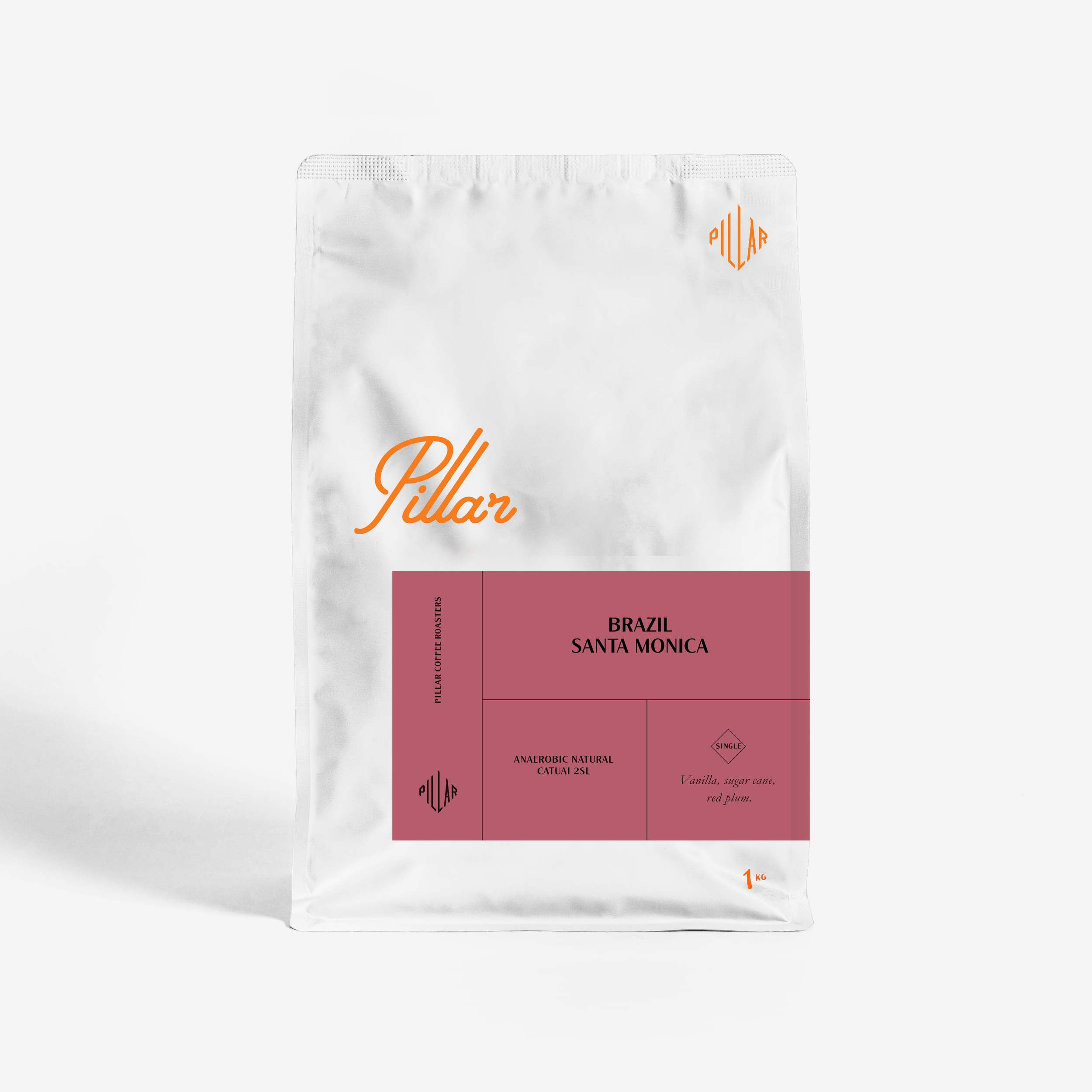
Brazil
Alta Mogiana, Minas Gerais
Jean Vilhena Faleiros
Santa Monica Estate
Catuai 2SL
1200-1240 masl
Anaerobic ORO Yeast 108 hours
Sugar cane, red delicious and vanilla.
The enduring legacy of the Vilhena Faleiros family: Santa Monica stands as a beacon of excellence in the realm of specialty coffee. As a third generation coffee farmer, Jean Vilhena Faleiros has seen knowledge, dedication and time honored traditions passed down from his family who have owned and operated the Santa Monica Estate for over 100 years. Under Jean's visionary guidance, Santa Monica Farm blends time-honored traditions, a commitment to organic farming and modern techniques, ensuring that the farm grows with both heritage and innovation.
Processing at Santa Monica: Because anaerobic environments naturally limit the types of microbes that can survive, Jeans pick on these commercial yeasts gives precise control over the microbial activity, helping him achieve specific sensory profiles, consistent flavours and allowing for highly unique coffees.
Anaerobic fermentation involves fermenting coffee cherries or beans in sealed in oxygen free tanks. Producers closely monitor the 48 to sometimes several hundred hour fermentation process, keeping an eye on variables like temperature and PH. Inoculated fermentations consume natural sugars in the cherries and beans and produce carbon dioxide. Because carbon dioxide is a heavier element than oxygen, it pushes out any remaining oxygen through the one way tank valve, creating a totally oxygen free environment.
Going Yeast Mode: Saccharomyces cerevisiae strains of yeasts consume the natural sugars in the coffee cherry and bean during the fermentation process, producing compounds which permeate the bean and produce distinct tasting notes like berries, wine, florals and fruit forward profiles. Saccharomyces cerevisiae are widely celebrated in the winemaking and brewing industries and are known for their ability to produce rich aromatic esters.
Anaerobic ORO Yeast: This strain of Saccharomyces cerevisiae yeast was developed specifically for coffee fermentation. In its design, ORO promotes a heavier body and is known for its ability to enhance red fruit and dark berry aromatics, increasing the sensory quality of the brewed cup. ORO in Italian and Spanish translates to ‘Gold”.
Santa Monica Farm: In the southeastern region of Brazil, you will find Santa Monica Farm nestled in the Alta Mogiana region of Minas Gerais. The farm sits at an elevation of 1200-1240 meters above sea level, and benefits from an idyllic microclimate which nurtures the finest coffee beans. The reputation of coffee from this area is so prized because of its ideal geography, slow maturation and generational expertise.
Geography is where it's at: The Global Coffee belt runs along the earth's equator, between the Tropics of Cancer, and the Tropics of Capricorn. It is defined by its latitude, sitting almost entirely between 25° North to 30° South. It is here that coffee plants thrive, receiving consistent warm temperatures, high altitudes, abundant wet seasons followed by dry periods and rich mineral dense soils.
Brazil’s latitude ranges from 15°16’ North to 33°44’ South. The country covers 4,395km from top to bottom, with landmass in both the Northern and Southern Hemispheres. Almost all of the country sits within the Global Coffee Belt, and is one of many factors making Brazil such a successful coffee producing country.
Keep an eye out for Jean Vilhena Faleiros: We are very excited to be welcoming back another stellar line up of coffees from Jean Vilhena Faleiros. This time around you will see 4 microlots from Jean Vilhena Faleiros Santa Monica Farm in Brazil on our filter menu as well as 1 on our espresso menu over the coming months. Across these lots you will see a mixture of varietals as well as processing methods. We are lucky enough to see the use of specific cultivated yeast strands during anaerobic fermentation on four out of the five of these coffees! It’s with great pleasure that we are able to share his fresh harvest with you again.
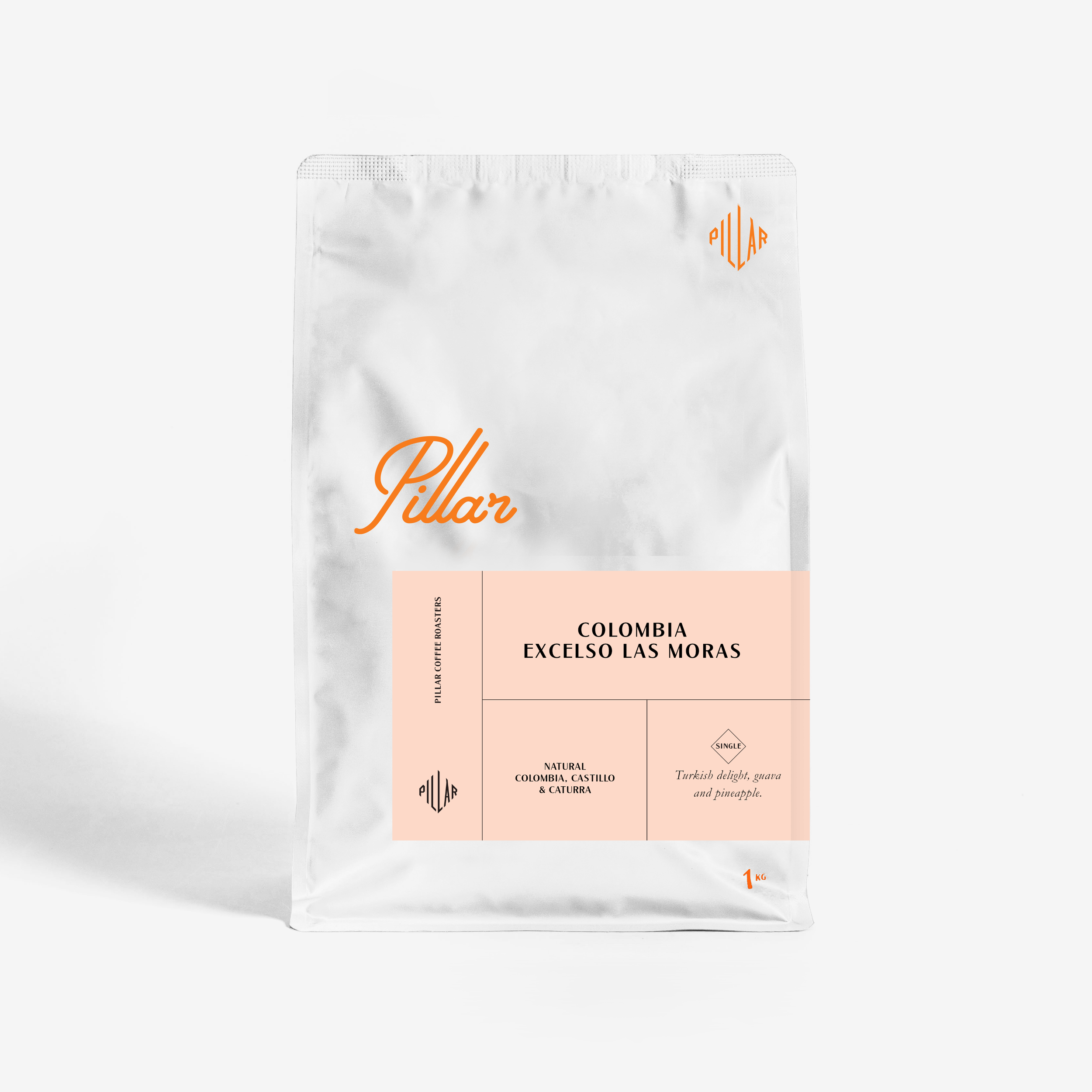
Las Moras
Pitalito, Huila
1700 - 1900 masl
Colombia, Castillo and Caturra
Natural
Turkish delight, guava and pineapple.
Painting the Picture: This renowned region provides the ideal conditions for growing high quality coffee. Pitalito is located in the country's south, in the well known coffee producing Department, Huila. The city can be found nestled in the picturesque Valley of Laboyos (Valle de Laboyos) near the Magdalena River. At altitudes ranging from 1700-1900 masl this lush andean plateau has rich volcanic soils and cool mountain microclimates. These conditions help prolong the ripening period, giving the cherries more time to absorb nutrients and develop flavours. You’re in for a real treat with this one!
Celebrated Varietals: The varieties used in this coffee are celebrated for their distinctive characteristics and contribute to the unique profile of Las Moras. These include Caturra, Bourbon Amarillo and Colombia.
The three-stage processing method: Processing of Colombia Excelso Las Moras undergoes a rigorous processing method to ensure consistency and high quality.
Once cherries arrive at the processing station they are washed, disinfected and sorted, removing any green or immature beans, leaves, stems and dirt. Right from the beginning this coffee is set up for sucess through selection and high standards.
The finest cherries then undergo a 24hour oxidation period before being de-pulped and washed to remove the mucilage. The oxidisation allows the natural enzymes in the cherries to enhance the development of the aromatic compounds, enriching the coffee's profile. The removal of the mucilage (key aspect in washed processing) contributes to the coffee's clean and crisp taste.
Controlled and homogeneous mechanical drying is the final stage in this process. This precise drying method helps ensuring the beans stabilise and their intricate flavours are preserved.
Excellent coffee: The term “Excelso” is used as an export grade classification, categorising the specific size and quality of the bean. “Excelso” is derived from the Spanish word for “Excellent’ and classifies beans that are slightly smaller in screen size than the Supremo grade.
With over 50 years of combined hospitality experience, the founders of Pillar Coffee have a deep understanding of both the coffee and service industries. This experience has spanned every aspect of hospitality, from sourcing specialty coffee beans to roasting, brewing, and serving the perfect cup. The people behind Pillar understand the roots of the coffee and hospitality industries and what the future should look like if we wish to live sustainably. So, when you buy coffee beans online or in Melbourne from Pillar, you’re treating yourself to the finest brew while contributing to a sustainable future.
Pillar offers a rotating variety of specialty coffees, with a focus on single origin beans roasted for espresso or filter. Our selection of easy-drinking delights has been carefully curated to cater for all palates. These adventurous options orbit around our steadfast blends, Prime (velvety caramel and chocolate notes) and Wayward (berry sweetness matched by decadent honeycomb and chocolate notes).
If you want to ensure your cup never runs dry, our fortnightly subscription could be up your coffee-loving alley.
And for those who want to taste the new coffee trends, we regularly offer limited-release deluxe and competition coffees. These are always snapped up fast, so join our mailing list or keep an eye on our website to catch them.
Whatever your coffee needs, Pillar has you covered.
FREE SHIPPING ON ORDERS OVER $50







Origins: Ethiopia, Central and South America
Prime is unwavering in consistency and flavour. It’s built upon a base of sweet caramel and chocolate notes with a floral and fruity front. This coffee is great across all methods, black or white.
A fruit forward blend with balanced acidity, juicy sweetness and a floral finish.